
As a piano teacher I often get asked by parents of new students, what type of piano they should have at home for their children to practice on. This is a complex matter, so I thought I can explain in this post what the differences are between all the options. So put your seatbelts on and let’s dive in!
Grand Piano
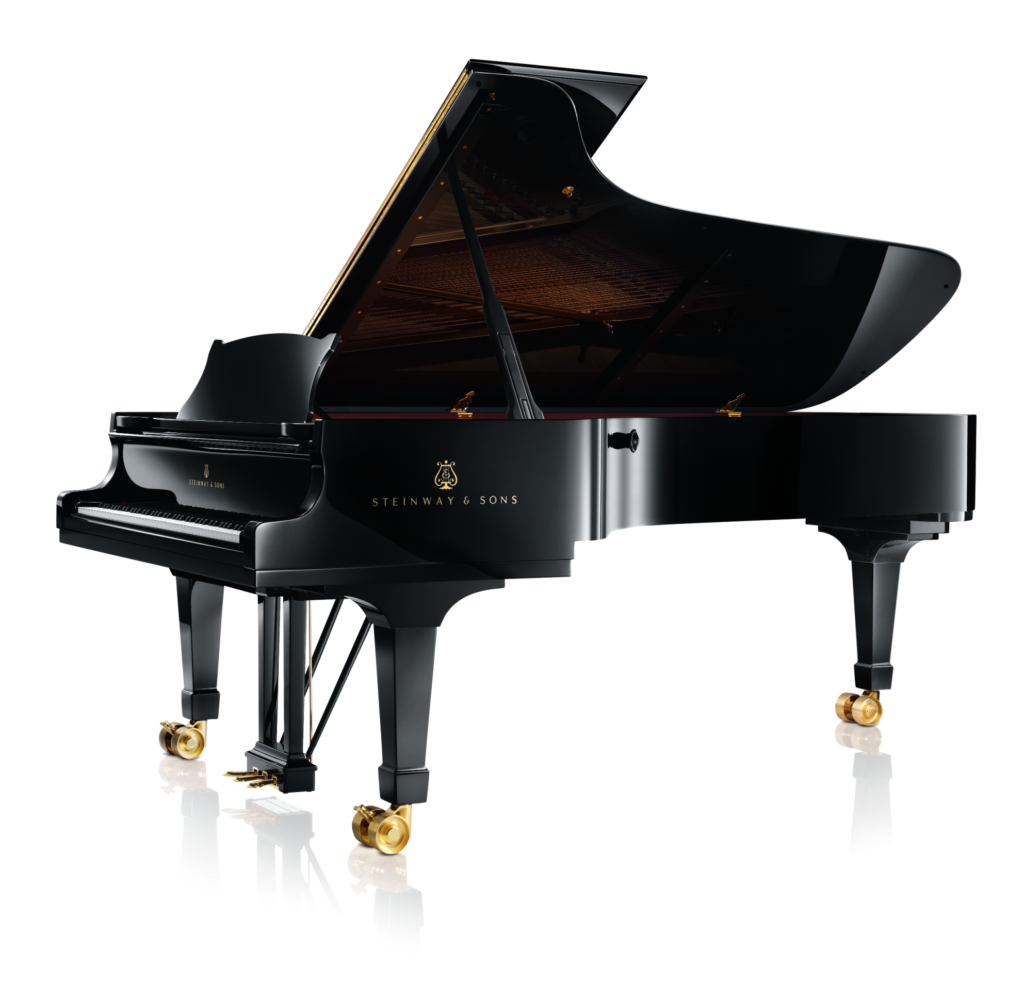
Credit: By “Photo: © Copyright Steinway & Sons”, CC BY-SA 3.0, https://commons.wikimedia.org/w/index.php?curid=18188418
The grand piano is the ultimate dream of any piano player. It’s an acoustic piano, which means that the sound is made by pressing a key which activates a hammer, hammer hits the strings, the strings vibrate and that’s what makes the sound. No electronics involved. As you can see, it has 3 legs and 3 pedals, and 88 keys which you can’t see in this picture (but you can trust me). It’s strings are flat, parallel to the floor.
The 3 pedals are:
Left: una corda (soft pedal) – you will notice that it shifts the keyboard sideways
Middle: sostenuto pedal
Right: sustain (damper) pedal
(More about the piano pedals in a different post)
Grand piano is the most developed version of a “piano”, has the widest range of colours, tones, dynamics, articulation, repetition etc. If you have no spatial or financial restrains, that is the best choice! But before making any decisions, contact your local piano technician for advice as every instrument is different. Think about it the way you’d be buying a car: we can all drive one but not all of us are car mechanics. Some cars look beautiful on the outside, but not that great on the inside. The same with pianos: a piano technician will be able to give you advice on the quality of a particular instrument.
Grand pianos come in various sizes, and what differs is the length of the strings therefore the case can be longer or shorter. What stays the same is the width. No matter how long the piano (from the keyboard to the back end of the instrument), it always has 88 keys which makes some 152-155cm.
Upright Piano
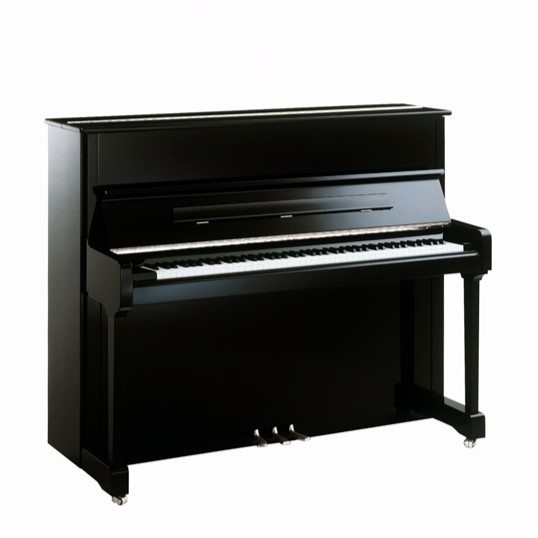
Credit: User:Gryffindor and User:Megodenas, CC BY-SA 3.0 https://creativecommons.org/licenses/by-sa/3.0, via Wikimedia Commons
An upright piano is also an acoustic piano. It’s a great option if a grand piano is too big or too expensive. And in fairness, very few of the families decide to invest in a grand piano unless music has been in the family before, i.e. someone in the family is a professional musician.
The main difference between a grand and an upright piano is that the strings in the upright piano are positioned vertically (not horizontally like in a grand), therefore the size that changes is the height. The taller the upright piano the longer the strings, and the greater the sound.
Upright pianos also have 88 keys, and 3 pedals:
Left: half-blow (soft) pedal – function similar to una corda making the sound softer, but achieved by bringing hammers closer to strings
Middle: practice pedal (mute rail) often with an option to slide into a groove to stay engaged
Right: sustain (damper) pedal
A good upright piano is absolutely sufficient to practice throughout primary and high school education, it’s action feel is very similar to the grand piano feel and the only difference is the lack of the double escapement action (a key doesn’t have to be completely released to be pressed again).
It is also a more space and finance friendly option, that allows the student to develop a good technique from the start: arm dropping, finger muscles, dexterity, the control of the dynamics, articulation, evenness of the sound, and all the good things that we learn day by day.
Digital Piano
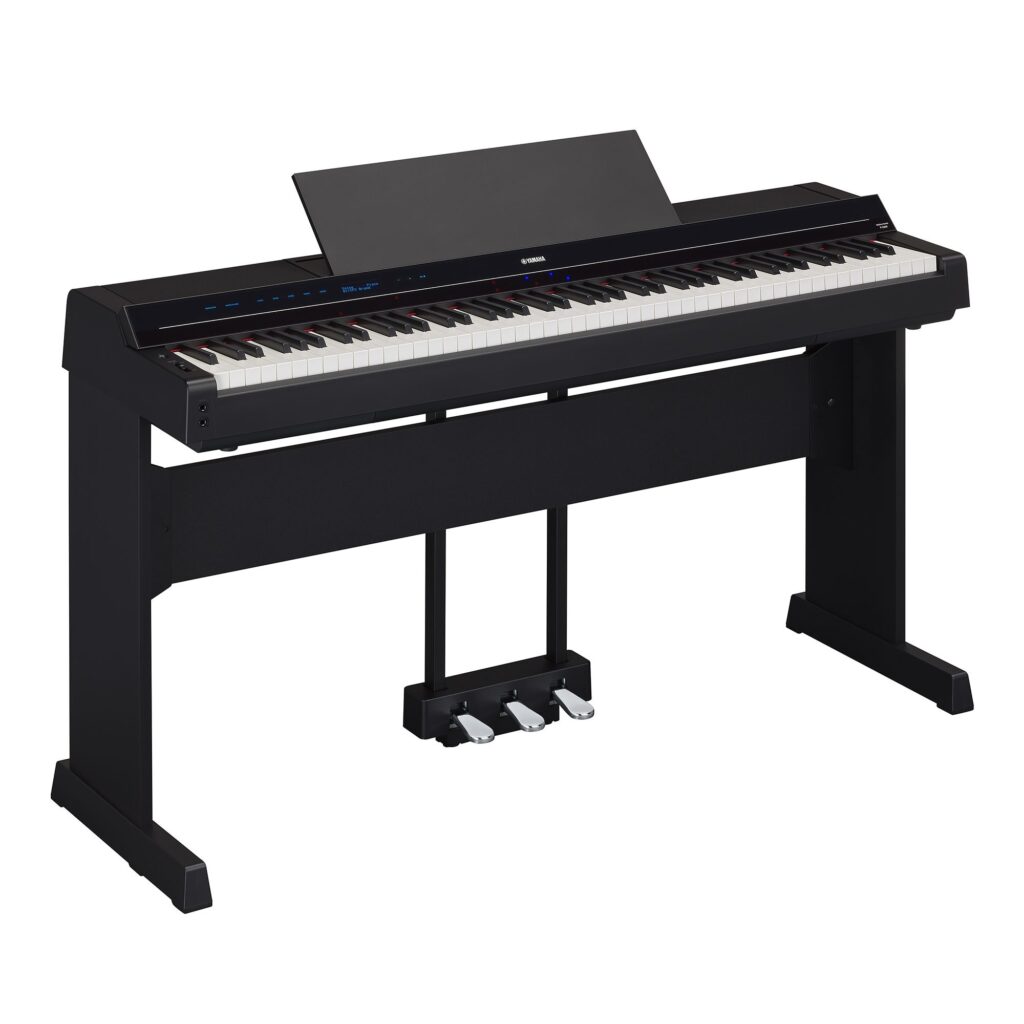
Credit: https://usa.yamaha.com/
A digital piano is (the clue is in the title) a digital version of a piano. It has 88 keys, and it’s action aims to imitate the action of an acoustic piano. Some digital pianos feel is closer, some further from the feel of an acoustic grand of upright. This option is okay for the first year or so, until we make a plan for an acoustic piano. The upsides of a digital are: the price, that it’s easy to move, and that it takes up less space than an upright; specifically there’s no strings so it has around 40cm in depth (rather than 60-65 like in an upright piano). It also has an adjustable volume so the practice can potentially be quiet if need be.
The downside is unfortunately lowering the quality of the learning process. From experience, the students who spend too much time on an acoustic piano tend not to develop the finger muscles strength and speed, because the keys are not as responsive as those of an acoustic piano.
Digital piano often has a function to change the sound, i.e. at a press of button your piano can sound like harpsichord, vibraphone, or pipe organ etc. It comes with 1 or 3 pedals. If with one, then it will be the sustain pedal. If with 3, they will work like the 3 pedals on a grand piano.
Electronic Keyboard
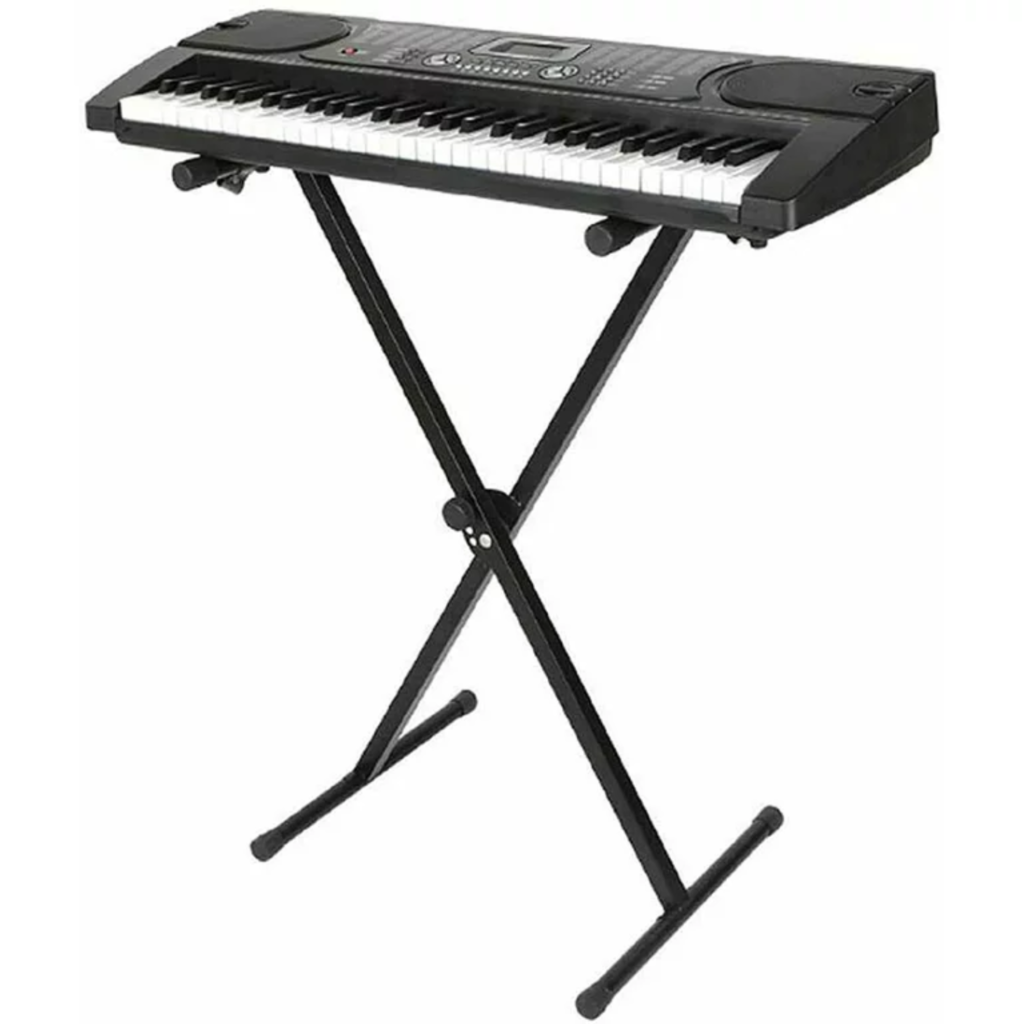
Credit: https://www.walmart.com
Or simply a keyboard, is an electronic instrument. It usually has less keys than a piano, for example: 61, 66 or 76. There are many differences between an electronic keyboard and the above 3 instruments:
- the keys are very light (not weighted)
- the ability to play louder or quieter depending on how strong we press is extremely limited
- sound is rather short, often not substantial enough to be able to her whether we play legato or non legato
- keyboard has multiple extra buttons (not piano keys) that allow the player to ‘play’ electronic sounds (of a rock band, etc.)
- by pressing a single key, the player can ‘play’ harmonies for rock / pop songs. To be able to do it on a piano, the player has to know the chords structure. On a keyboard it can be achiever by playing one or 2 keys.
Even though young kids like playing with a keyboard, it is rather a toy than an instrument that can develop a real skill. It doesn’t help build any muscle in the hands and fingers, nor does it facilitate learning to play with the dynamics, articulation, or any expression.
From experience as a teacher, students that spend more than a few initial months on a keyboard quickly loose interest in piano playing because most of the practice happens at home and playing a keyboard (comparing to playing a piano) doesn’t give them the expected progress. It is something like a “chicken and egg” dilema. On one hand I understand parents’ approach to invest in a good quality instrument when they see their child’s commitment, on the other hand, the progress and the commitment will come only with a good quality instrument.
I hope this helped, and I will see you in the next post!