
We all started somewhere…

Image credit: Pexels.com
When we first learn to play the piano we not only learn the note values, key names, counting, articulation, dynamics (okay, okay that’s enough of the fancy words), but also how to hold our body while we play. The awareness of our limbs and fingers is something that some of us may not think of at the start of the learning process, but it is essential to the comfortable and prolonged time spend at the instrument.
Mastering any musical instrument requires consistent daily practice, starting from shorter times, and for professionals extending to many hours daily. So how to make sure that we hold our bodies correctly, not to create and accumulate bad habits that with time would result in pains and injuries?
In a nutshell:
1. Sit in the middle of your piano
2. Set elbow level slightly above the keyboard level
3. Ground your feet on the floor
4. Try if you can touch the fallboard with your knuckles
5. Sit on a front half to a third of your bench
6. Keep your back straight and shoulders relaxed
So, first we should start from finding the middle of the piano (around Middle C area) and aligning our belly button with it (I still remember my first piano lesson when my teacher asked me to do that).
Secondly, we need to adjust the bench hight to the level where our elbows are slightly above the keys, and if we place our fingers on the keyboard, the forearms will be at a slight angle down towards the keyboard, not far off being parallel to the floor (see the picture of Yuja Wang below).
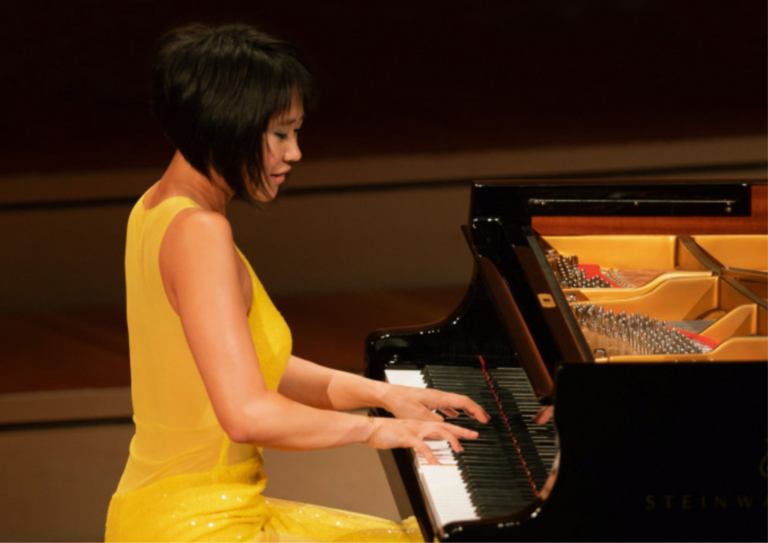
Image credit to: https://seenandheard-international.com/. April 2022.
Once we have adjusted the hight of the bench to suit the elbow hight, we can have a look at our feet and make sure that they are comfortably grounded on the floor, both heels and toes. No hanging, no dandling, no tiptoeing. If the floor is too far, we bring it up with a step stool, or we may want to invest in a piano pedal extender (more on a pedal extender in a future post). In early stages of learning it is not necessary to use the pedals, so a simple box (or even a stack of books to get you started) will do. The main thing is to keep the feet solidly on the floor.
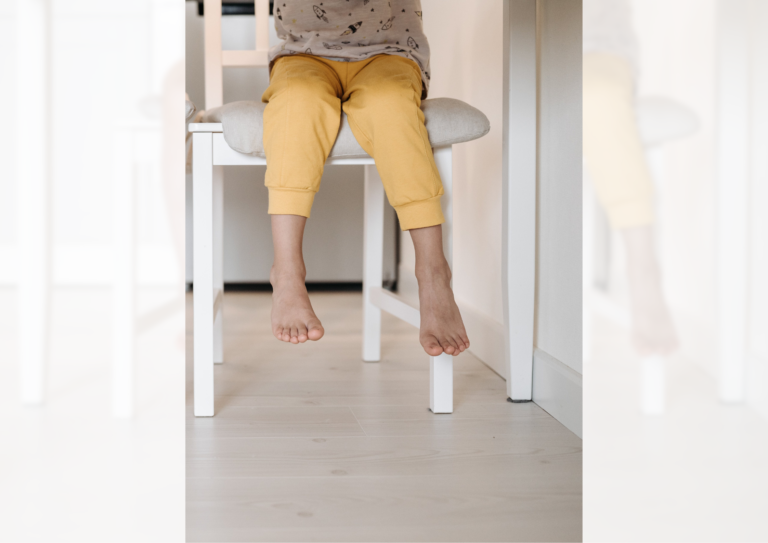
Image credit: Pexels.com
The next thing is to check how close or far we should sit. This step has two sub-steps, and the first one will be to gently clench the fists (one of my students, Caleb called it ‘cat paws’), stretch the arms forward and reach to the fallboard with our knuckles. Fallboard is at the end of the key where you can normally see the name of the brand of your piano, and you can close it down on the keys when you are finished playing your piano. We should be able to reach to the fallboard with our knuckles, and this will show us how close or far we will sit.
The second sub-step is to adjust how close or far to put the piano bench. We should sit with our sit bones firmly on the bench, and occupy only a half to a third of the bench. The body weight should be distributed between the feet and the bum, so we have three points of support. If we sit too deep on the bench, the gravity centre will be only in our hips, and it will make it hard to stretch the arms to the far right or far left part of the keyboard (Kermit in the first picture up above is doing quite a good job sitting on the edge of his bench).
Now that we’ve set up our position, we should make sure that our shoulders are relaxed, and our back is straight. This will prevent any back or neck pain, especially if we spend long hours at our instruments.
Here is what Yamaha recommend as correct piano posture:

Image credit: www.usa.yamaha.com
So, voilà! Now you know how to correctly sit at the piano. Go ahead and test it out over the next few days and the more you will be tuning in to how your body is feeling, the more you will know what to adjust. It also may change with time, or you may need to sit slightly different to play different pieces.
The most important thing is to be able to maintain comfortable, and injury free piano playing. Because mastering a skill requires multiple hours, days, months, and years (!) of repetitive movements, certain parts of our bodies become more prone to be overworked than other. So keep that in mind and I wish you many hours of fun at the piano with as little strain on your body as possible!
I hope this helped, please get in touch if you have any thoughts or comments, I’m looking forward to hearing from you ?
See you in the next post!